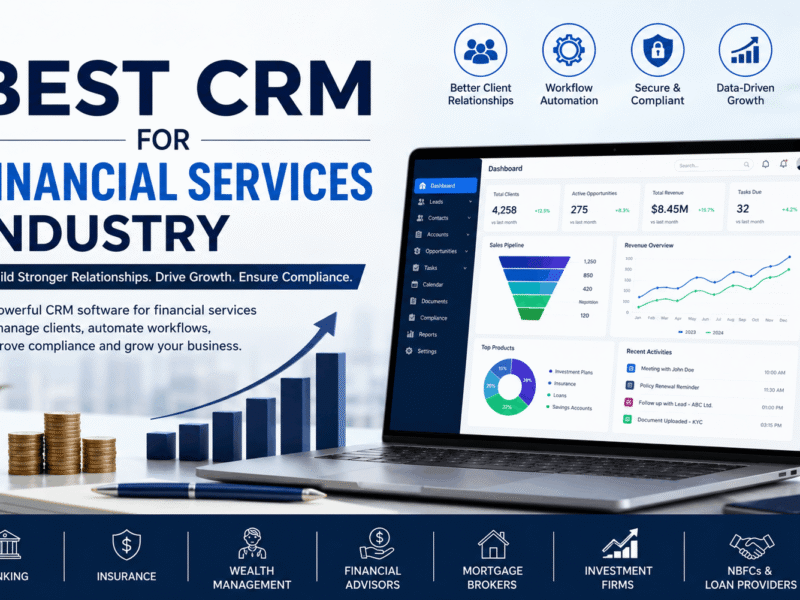
Business growth depends heavily on how effectively leads are managed. Generating leads through marketing campaigns, referrals, websites, and social media is only the first step. Without a structured system to organize, track, and nurture those leads, even high-quality prospects can be lost.
A Leads manager CRM provides the framework businesses need to bring order and consistency to their lead management efforts. When combined with Custom Leads Manager Software, organizations can align lead workflows with their unique sales processes—making growth more predictable, measurable, and scalable.
Table of Contents
The Risks of Unstructured Lead Management
Many businesses rely on spreadsheets, email threads, or disconnected tools to manage leads. While this may seem manageable at first, it often leads to serious challenges as the business grows, including:
- Missed or delayed follow-ups
- Duplicate or incomplete lead data
- Poor visibility into lead status
- Inefficient sales coordination
- Inaccurate performance tracking
Without structure, teams spend more time managing information than engaging prospects. A Leads manager CRM eliminates this chaos by providing a centralized and organized approach to lead handling.
What Structured Lead Management Really Means
Structured lead management is about defining clear processes for how leads are captured, assigned, nurtured, and converted. It ensures that every lead follows a consistent journey from first interaction to final outcome.
A Leads manager CRM helps standardize this process by creating defined stages, ownership rules, and follow-up actions. When businesses use Custom Leads Manager Software, they can further tailor these structures to reflect their specific industry, sales cycle, and customer behavior.
How a Leads Manager CRM Supports Business Growth
Centralized Lead Data
One of the primary advantages of structured lead management is data centralization. A Leads manager CRM stores all lead information in one system, making it accessible to sales, marketing, and management teams.
Centralized data reduces duplication, improves accuracy, and ensures everyone works with the same up-to-date information. This foundation is essential for scaling operations and improving collaboration across teams.
Improved Lead Response and Follow-Ups
Timely follow-up plays a major role in conversion success. Structured workflows within a Leads manager CRM ensure that leads are contacted promptly and consistently.
With Custom Leads Manager Software, businesses can automate follow-up reminders, task assignments, and status updates—reducing reliance on manual tracking and improving response times.
Consistent Sales Processes
As teams grow, maintaining consistency becomes challenging. A structured Leads manager CRM enforces standardized processes across all sales representatives, ensuring leads are handled uniformly regardless of who owns them.
This consistency not only improves customer experience but also simplifies training, performance evaluation, and process optimization.
Customization Enables Scalability
Every business has unique requirements based on its industry, target audience, and sales approach. A generic system may not support long-term growth. This is where Custom Leads Manager Software becomes essential.
Customization allows businesses to:
- Define custom lead stages
- Create tailored workflows
- Adjust automation rules
- Add industry-specific data fields
As business needs evolve, a customizable CRM can adapt without disrupting existing operations—making growth smoother and more sustainable.
Better Insights Through Reporting and Analytics
Structured lead management generates meaningful data. A Leads manager CRM provides visibility into key performance indicators such as conversion rates, lead source effectiveness, and pipeline movement.
With Custom Leads Manager Software, businesses can build reports aligned with their growth objectives. These insights support informed decision-making, helping leaders identify bottlenecks, optimize strategies, and forecast revenue more accurately.
Enhanced Collaboration Across Teams
Growth often requires multiple teams to work together seamlessly. A structured Leads manager CRM improves collaboration by providing shared access to lead histories, notes, and communication logs.
When sales and marketing teams operate from a single system, alignment improves. This shared understanding leads to better lead qualification, smoother handovers, and higher conversion efficiency.
Future-Proofing Business Operations
As lead volumes increase, manual systems become unsustainable. A structured approach supported by a Leads manager CRM ensures that operations remain efficient even as demand grows.
By adopting Custom Leads Manager Software, businesses future-proof their lead management processes—allowing them to handle increased complexity without sacrificing control or performance.
Conclusion
Structured lead management is no longer optional for businesses aiming for consistent growth. A well-implemented Leads manager CRM brings clarity, efficiency, and accountability to the entire lead lifecycle.
When paired with Custom Leads Manager Software, organizations gain the flexibility to adapt workflows, automate critical tasks, and scale operations confidently. Ultimately, structured lead management transforms growth from a reactive challenge into a repeatable and predictable process.